Heritage Places, Castles & Architecture  


Click on Images for Information


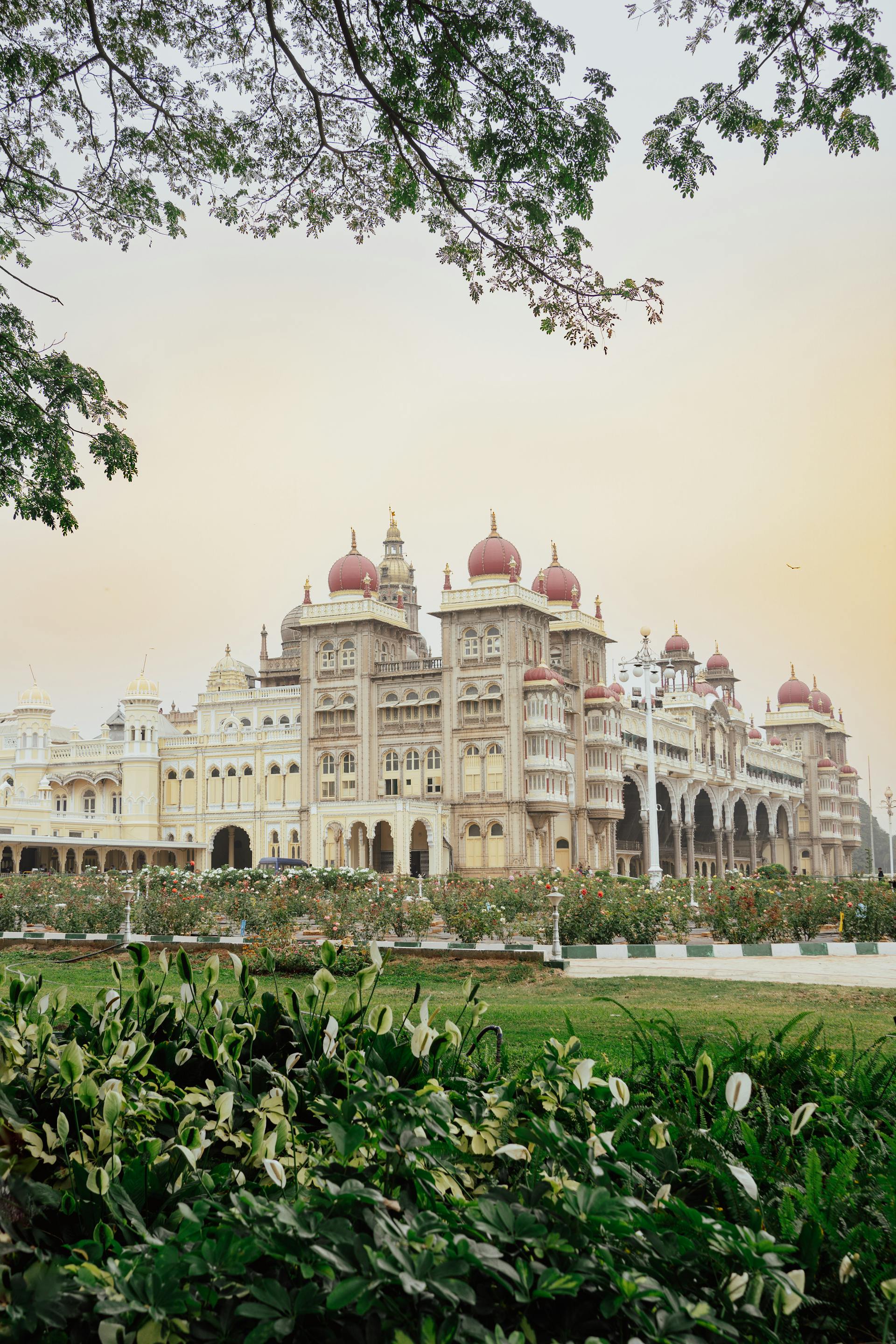
Amba Vilas Palace, another name for Mysore Palace, is a royal residence and a historic palace. It is situated in the Indian state of Karnataka, in Mysore. It was once the seat of the Kingdom of Mysore and the formal palace of the Wadiyar family. The palace looks east toward the Chamundi Hills and is located in the heart of Mysore. This is one of seven palaces in Mysore, which is sometimes referred to as the -- City of the Palaces. But the palace inside the new fort is the one that is specifically referred to as the Mysore Palace. Mysuru, which translates to citadel, was the original name of the land where the palace presently stands. Built in the 14th century, the first palace of the Old Fort was destroyed by fire and rebuilt several times. The present fort was constructed of stone, bricks, and wood, but the Old Fort was constructed of wood, which made it more prone to fire. The present building, often referred to as the New Fort, was built between 1897 and 1912 following the fire that destroyed the Old Palace. As of 2014, Mysore Palace saw over three million tourists annually, making it one of the most well-known tourist destinations of India. When eldest daughter of Chamaraja Wodeyar, Jayalakshammani, was married in 1896, the last palace—now referred to as the Old Palace or the Wooden Palace—burned to ashes. Henry Irwin, a British architect, was hired by Maharaja Krishnaraja Wodeyar IV and his mother, Maharani Kempananjammanni Devi, to construct a new palace. E.W. Fritchley was a consulting engineer by profession. The royal family, meanwhile, resided at the neighboring Jaganmohan Palace. An executive engineer from the Mysore Palace division oversaw construction. The new palace was planned using the extensive architectural research he did while visiting Delhi, Madras, and Calcutta. In the years about 1930, when Maharaja Jayachamarajendra Wadiyar was in power, the palace underwent additional expansion. At the request of Raja of Mysore, Krishnamacharya, the forerunner of contemporary yoga as exercise, taught yoga in the palace around the beginning of the 20th century. Krishnamacharya was probably influenced by a large 19th-century book called the Sritattvanidhi, which featured illustrations of 112 yoga postures created by an earlier Raja. #History #Architecture

This article uses text information from the Wikipedia article -- Mysore_Palace -- [Wikipedia-Article-Link : https://en.wikipedia.org/wiki/Mysore_Palace ] which is released under the -- Creative Commons Attribution-ShareAlike 4.0 License – [License-Link: https://en.wikipedia.org/wiki/Wikipedia:Text_of_the_Creative_Commons_Attribution-ShareAlike_4.0_International_License ] [List of Principal Authors (5 or less) of the Wikipedia-Article on the date of this Article being Created in this Website: - RaeMer, Chiswick Chap, 2606:A000:6606:B200:80E9:1FB7:301C:31D, Prajjwal3959, Danial Bass] [Use the following Authorship tool to find out the author contributions:- https://xtools.wmcloud.org/authorship ] [The Current Article on this Website has been paraphrased from the above linked corresponding Wikipedia-Article and You may redistribute this, verbatim or modified, provided that you comply with the terms of the Creative Commons Attribution-ShareAlike 4.0 License] [License-Link: https://en.wikipedia.org/wiki/Wikipedia:Text_of_the_Creative_Commons_Attribution-ShareAlike_4.0_International_License ]

[Image : Mysore Palace in Karnataka, India; Image-Author : Nandhu Kumar ][Image_Source-Link: https://www.pexels.com/photo/mysore-palace-in-karnataka-india-20796003/ ] [License-Link: https://www.pexels.com/license/ ] [Please Also Relate to Original Individual Text and Image URLs for More Usage Property and Sharing, Remixing or Attributing the Contents]
[Contents on Wikipedia is covered by -- Disclaimer – [Wikipedia-Disclaimer-Link : https://en.wikipedia.org/wiki/Wikipedia:General_disclaimer ] [Contents in this Website is also covered by Disclaimer linked at the bottom of the Page] [This website article means no intellectual appropriation by any way and only wishes to contribute in sharing of knowledge]


  Heritage Places, Castles & Architecture  


Click on Images for Information



Disclaimer   Privacy Policy   Disclosure   User-Manual   Contact   About Us