.jpg "Mythology, Legends, Folklore and Mysterious Things") Mythology, Legends, Folklore and Mysterious Things
Mythology, Legends, Folklore and Mysterious Things
Click on Images for Information


@Mythology, Legends, Folklore and Mysterious Things
13-Jun-2026 07 am
13-Jun-2026 07 am
This article uses text information from the Wikipedia article – Hervarar_saga_ok_Heiðreks – [Wikipedia-Article-Link: https://en.wikipedia.org/wiki/Hervarar_saga_ok_Hei%C3%B0reks ] which is released under the -- Creative Commons Attribution-ShareAlike 4.0 License – [License-Link: https://creativecommons.org/licenses/by-sa/4.0/deed.en ( https://en.wikipedia.org/wiki/Wikipedia:Text_of_the_Creative_Commons_Attribution-ShareAlike_4.0_International_License )] and additional terms may apply. [List of Principal Authors (5 or less) of the Wikipedia-Article on the date of this Article being Created in this Website: - Xoool, Alarichall, 5.198.10.236, Wiglaf, Berig] [Use the following Authorship tool to find out the author contributions:- https://xtools.wmcloud.org/authorship ] [The Current Article on this Website has been paraphrased from the above linked corresponding Wikipedia-Article and You may redistribute this, verbatim or modified, provided that you comply with the terms of the Creative Commons Attribution-ShareAlike 4.0 License] [License-Link: https://creativecommons.org/licenses/by-sa/4.0/deed.en ( https://en.wikipedia.org/wiki/Wikipedia:Text_of_the_Creative_Commons_Attribution-ShareAlike_4.0_International_License )]
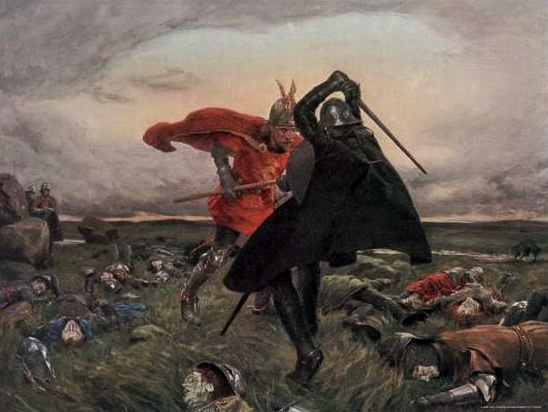
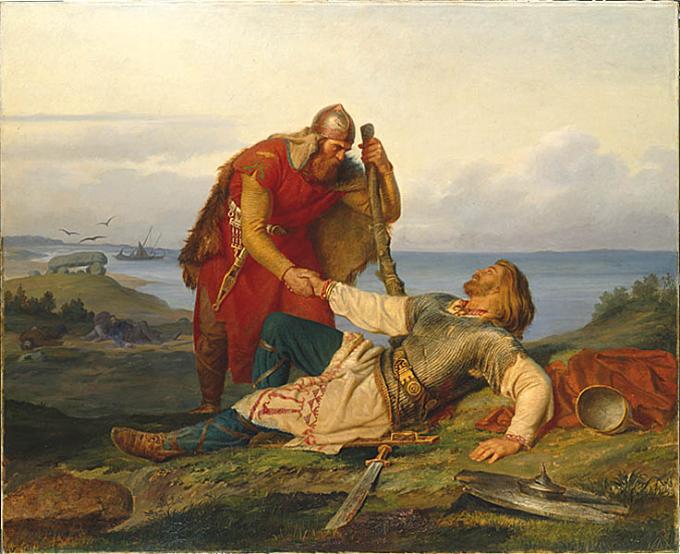
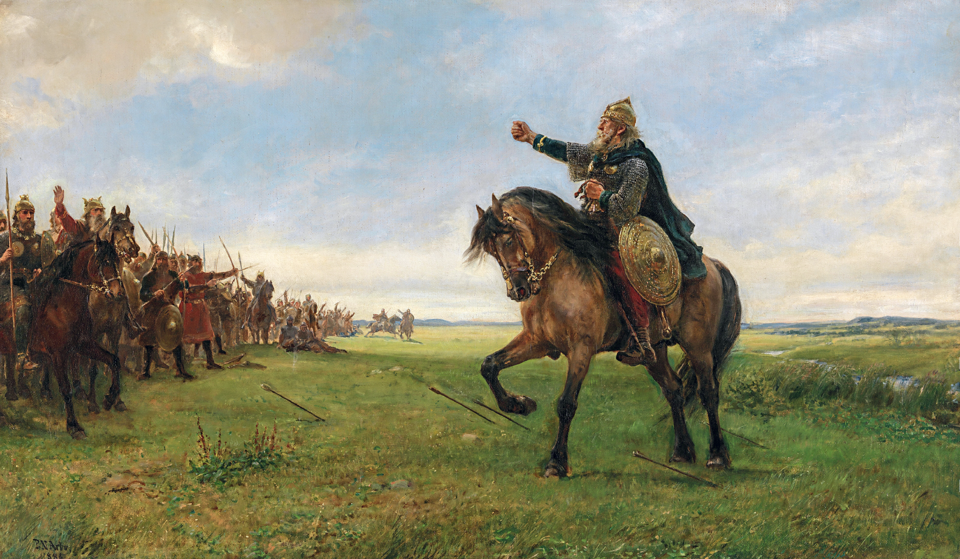
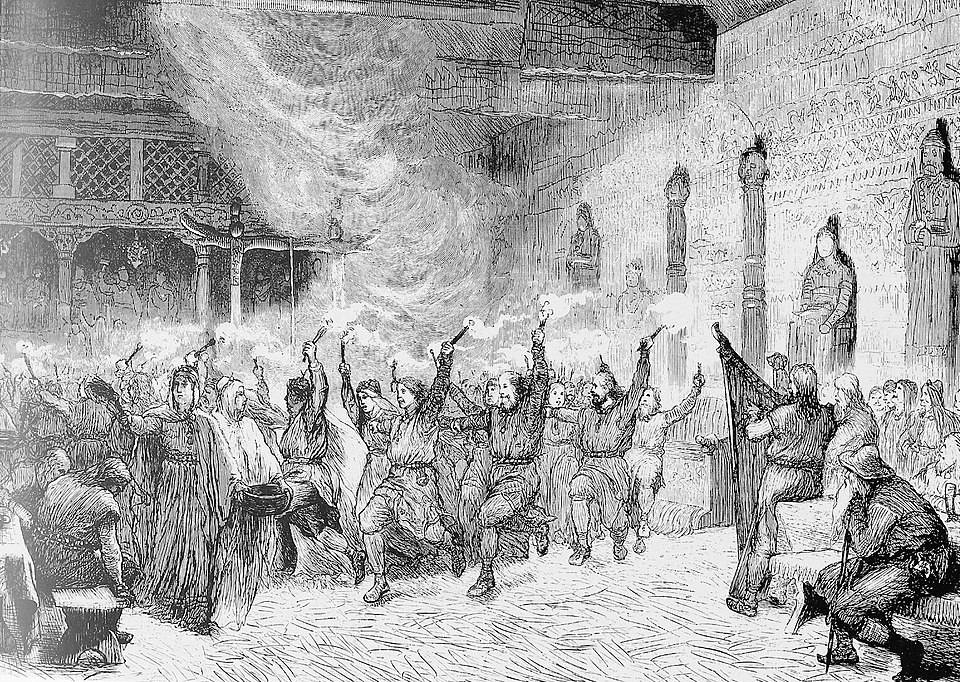
This article also uses an image from the Wikipedia article – Hervarar_saga_ok_Heiðreks – [Wikipedia-Article-Link: https://en.wikipedia.org/wiki/Hervarar_saga_ok_Hei%C3%B0reks ] [Image: Gizur challenging the Huns according to the Hlöðskviða (Hunnenschlachtlied). Painting by Peter Nicolai Arbo 1886.] [Wikipedia-Image-Link: https://en.wikipedia.org/wiki/File:Peter_Nicolai_Arbo_%E2%80%93_Gizur_challenges_the_Huns.png ] [This work (Image) is faithful photographic reproduction of a two-dimensional, public domain work of art. The author died in 1892, so this work is in the public domain in its country of origin and other countries and areas where the copyright term is the life of author plus 100 years or fewer. This work is in the public domain in the United States because it was published (or registered with the U.S. Copyright Office) before January 1, 1931.] [Please Also Relate to Original Individual Text and Image URLs for More Usage Property and Sharing, Remixing or Attributing the Contents]
[Contents on Wikipedia is covered by – Disclaimer – Wikipedia-Disclaimer-Link: https://en.wikipedia.org/wiki/Wikipedia:General_disclaimer ] [Contents in this Website is also covered by Disclaimer linked at the bottom of the Page] [This website article means no intellectual appropriation by any way and only wishes to contribute in sharing of knowledge]
 Mythology, Legends, Folklore and Mysterious Things
.gif "The social or Céilí dances of Ireland are very diverse not only in Ireland but also throughout the world. There might be as little as two dancers or as many as sixteen dancers in a Céilí. Céilí dances can also be performed with an infinite number of couples moving in a circle or in a continuou")
.jpg "The medieval heroic love-tale of Tristan and Iseult, also known by other names including Tristram and Isolde, has been told multiple times since the twelfth century. The story is a tragic lamentation about the forbidden love affair between the Cornish knight Tristan and the Irish princess Iseult, an")
Click on Images for Information
.jpg "In Finnish mythology, Ukko, a counterpart to Uku in Estonian mythology, is the deity of the sky, weather, harvest, and thunder. The short form of the name Ukko is Ukkonen, which is the Finnish word for thunder. It is contested by academics whether status of Ukko as the most important god in Finnish")
_-_1909.jpg "The most revered god in the Baltic religion after Dievas was Perkūnas, the depicts the thunder god. He is described as the deity of the sky, thunder, lightning, storms, rain, fire, war, law, order, fertility, mountains, and oak trees in both Lithuanian and Latvian mythology. The majority of the kno")