Heritage Places, Castles & Architecture  


Click on Images for Information


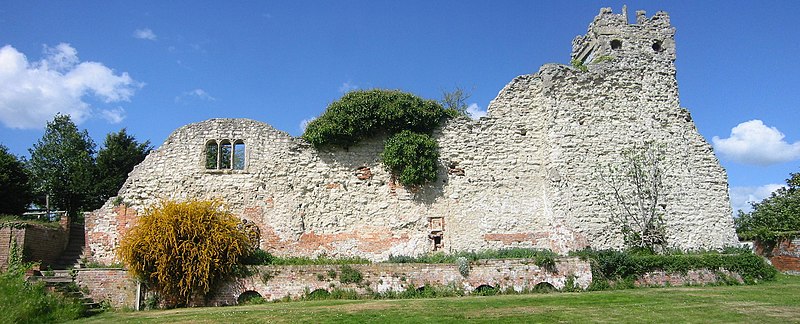
Situated near the River Thames in Wallingford, in the English county of Oxfordshire, formerly Berkshire, Wallingford Castle was a prominent medieval fortress. It was originally built as a motte-and-bailey structure inside of an Anglo-Saxon burgh in the eleventh century. During the years of the Anarchy civil war, it was kept for the Empress Matilda and withstood several sieges before being taken. It evolved into an opulent castle over the following two centuries, used by nobility and their close relatives. The castle deteriorated after Henry VIII left it unoccupied as a royal residence. Being reconstructed during the English Civil War and being taken by Parliamentary forces following a protracted siege, it was ultimately slighted, or purposefully destroyed. After that, the site was mostly abandoned, and today the public can explore the substantial earthworks and the few remnants of the castle walls. Before the Norman invasion of 1066, Wallingford, a prosperous town with its own mint and a significant regional town overseeing a crucial crossing point on the River Thames, was protected by an Anglo-Saxon burgh, or town wall. The ruler of the town, Wigod of Wallingford, welcomed William the Conqueror to Wallingford and provided entertainment for him. The monarch quickly began building three important castles to assert authority over the Thames Valley, along with the royal castles of Windsor and Wallingford, following the conclusion of the first invasion: the baronial castle at Oxford, which was eventually given to the royal family. Wallingford Castle was most likely constructed in the years 1067–1071. Robert eventually gained a large portion of the property of his father-in-law, after marrying Ealdgyth, daughter of Wigod. With the motte along the river overlooking the ford, the wooden castle was constructed in the northeast corner of the town, making use of the original Anglo-Saxon ramparts. The new motte-and-bailey construction needed significant demolition work. Remarkably, the castle seems to have been built over affluent Anglo-Saxon dwellings, most likely formerly occupied by housecarls. The castle was strongly linked to King John toward the end of the 12th century. Richard I had given the town to King John in 1189. When John revolted in 1191, he also took control of the castle. He was compelled to surrender it, but when he became king in 1199, he took it back. Between 1215 and 1216, John used Wallingford Castle extensively, strengthening the defenses and raising a sizable garrison to keep it safe. In 1231, Richard, the 1st Earl of Cornwall, received formal permission to use the castle as his primary residence under Henry III. Later on, the castle served as a county jail as well, and many complaints were made regarding the amount of criminals who were able to get out of there. Towards the end of the fourteenth century, it became increasingly difficult to sustain the castle from local fees and revenues, and extra royal monies were needed for the continual maintenance that was needed on it. Nevertheless, the fortress was sturdy and well-defended when Richard II was overthrown in 1399. Wallingford Castle seems to have ceased to be used as a royal palace when Henry VIII used it for the last time in 1518. It had little significance in the Wars of the Roses. The 16th century saw the downfall of the castle; it was split off from the Duchy of Cornwall and, during the reign of Queen Mary, the site was cleared of lead and other building materials in order to be used at Windsor Castle. In the process, the castle was all but destroyed, though a brick structure was still in service as a jail in the eighteenth century. The bailey was first developed in 1700 with a sizable house, then in 1837 it was replaced with a gothic mansion house. In 1972, the mansion was dismantled owing to mounting expenses, which became Wallingford Castle a scheduled monument and a Grade I listed building. #History #Architecture #Castles

This article uses text information from the Wikipedia article -- Wallingford_Castle -- [Wikipedia-Article-Link : https://en.wikipedia.org/wiki/Wallingford_Castle ] which is released under the -- Creative Commons Attribution-ShareAlike License 4.0 -- [License-Link: https://en.wikipedia.org/wiki/Wikipedia:Text_of_the_Creative_Commons_Attribution-ShareAlike_4.0_International_License ] [List of Principal Authors (5 or less) of the Wikipedia-Article on the date of this Article being Created in this Website : - Hchc2009 , Sciencebloke, EarthTrust , Richard Nevell , Verica Atrebatum] [Use the following Authorship tool to find out the author contributions :- https://xtools.wmcloud.org/authorship ] [The Current Article on this Website has been paraphrased from the above linked corresponding Wikipedia-Article and You may redistribute this, verbatim or modified, provided that you comply with the terms of the Creative Commons Attribution-ShareAlike License 4.0] [License-Link: https://en.wikipedia.org/wiki/Wikipedia:Text_of_the_Creative_Commons_Attribution-ShareAlike_4.0_International_License ]

This article also uses an image from the Wikipedia article -- Wallingford_Castle -- [Wikipedia-Article-Link : https://en.wikipedia.org/wiki/Wallingford_Castle ] [Image : Ruins of Wallingford Castle; Wikipedia-Image-Author : Pitou250] [Wikipedia-Image -Link : https://en.wikipedia.org/wiki/File:Wallingford_castle_ruins.jpg ] [The copyright holder of the work (Image), release this work into the public domain. This applies worldwide In some countries this may not be legally possible; if so: the copyright holder grants anyone the right to use this work (Image) for any purpose, without any conditions, unless such conditions are required by law.] [Please Also Relate to Original Individual Text and Image URLs for More Usage Property and Sharing, Remixing or Attributing the Contents]
[Contents on Wikipedia is covered by -- Disclaimer -- [Wikipedia-Disclaimer-Link : https://en.wikipedia.org/wiki/Wikipedia:General_disclaimer ] [Contents in this Website is also covered by Disclaimer linked at the bottom of the Page]  [This website article means no intellectual appropriation by any way and only wishes to contribute in sharing of knowledge]


  Heritage Places, Castles & Architecture  


Click on Images for Information



Disclaimer   Privacy Policy   Disclosure   User-Manual   Contact   About Us