 Historical Events
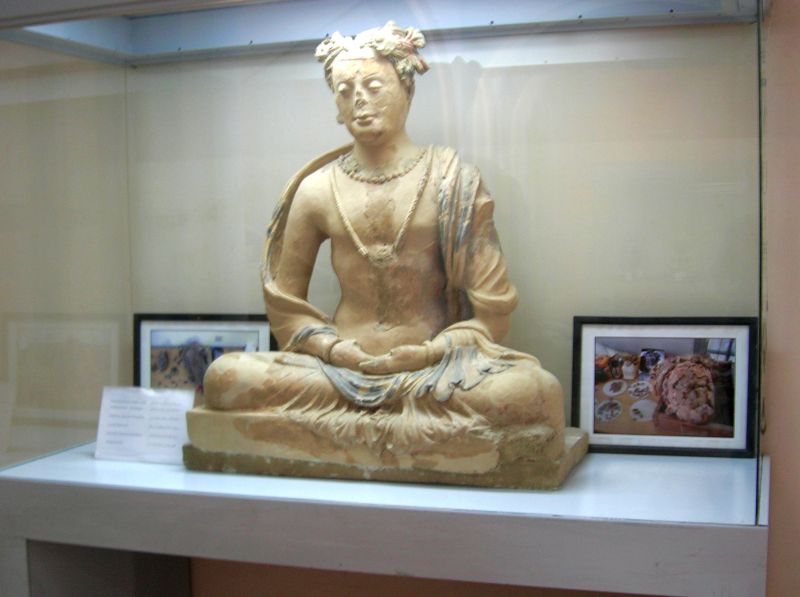
.jpg "Roxana, also referred to as Roxanne, Roxanna, and Roxane, was a princess of Bactria or Sogdiana who became the wife of Alexander the Great following his invasion of Persia and the subsequent conquest of the Achaemenid Empire. She was the daughter of Oxyartes, a nobleman and satrap of Bactria and Sog")
Click on Images for Information


@Historical Events
04-Jan-2026 06 pm
04-Jan-2026 06 pm
This article uses text information from the Wikipedia article – Nerthus – [Wikipedia-Article-Link: https://en.wikipedia.org/wiki/Nerthus ] which is released under the -- Creative Commons Attribution-ShareAlike 4.0 License – [License-Link: https://en.wikipedia.org/wiki/Wikipedia:Text_of_the_Creative_Commons_Attribution-ShareAlike_4.0_International_License ] [List of Principal Authors (5 or less) of the Wikipedia-Article on the date of this Article being Created in this Website: - Bloodofox, 12.75.225.12, Finnrekkr, Spida-tarbell, Goldenrowley] [Use the following Authorship tool to find out the author contributions:- https://xtools.wmcloud.org/authorship ] [The Current Article on this Website has been paraphrased from the above linked corresponding Wikipedia-Article and You may redistribute this, verbatim or modified, provided that you comply with the terms of the Creative Commons Attribution-ShareAlike 4.0 License] [License-Link: https://en.wikipedia.org/wiki/Wikipedia:Text_of_the_Creative_Commons_Attribution-ShareAlike_4.0_International_License ]
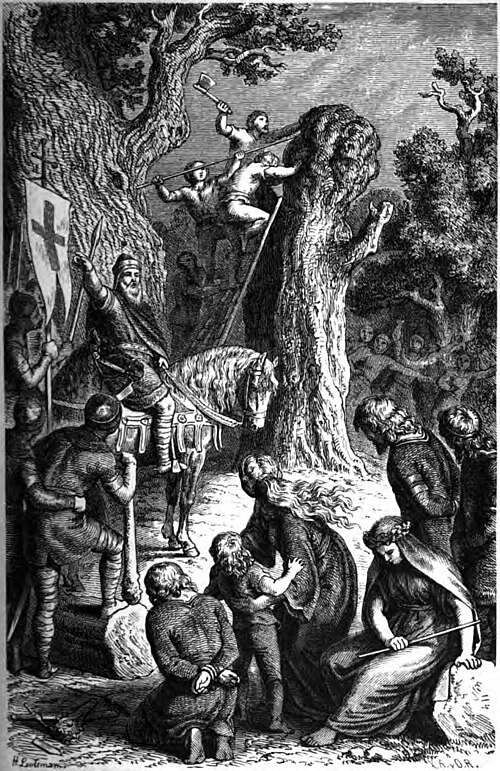
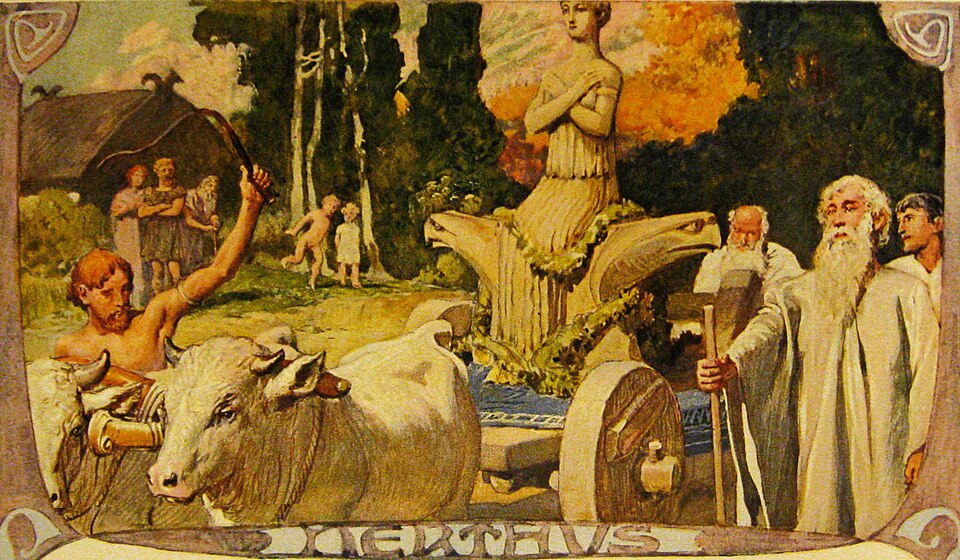
This article also uses an image from the Wikipedia article – Nerthus – [Wikipedia-Article-Link: https://en.wikipedia.org/wiki/Nerthus ] [Image: Spectators watch as the processional wagon of the Germanic goddess Nerthus moves along, inspired by description of Tacitus of the Germanic custom in his first century AD work Germania. Wikipedia-Image-Author: Emil Doepler (1855–1922)] [Wikipedia-Image-Link: https://en.wikipedia.org/wiki/File:Nerthus_by_Emil_Doepler.jpg ] [The Work (Image) is in the public domain in its country of origin and other countries and areas where the copyright term is the life of Author plus 70 years or fewer. The Work (Image) is also believed to be in Public Domain in the United States as well][Please Also Relate to Original Individual Text and Image URLs for More Usage Property and Sharing, Remixing or Attributing the Contents]
[Contents on Wikipedia is covered by – Disclaimer – Wikipedia-Disclaimer-Link: https://en.wikipedia.org/wiki/Wikipedia:General_disclaimer ] [Contents in this Website is also covered by Disclaimer linked at the bottom of the Page] [This website article means no intellectual appropriation by any way and only wishes to contribute in sharing of knowledge]
 Historical Events
Click on Images for Information