Historical Events  


Click on Images for Information



@Historical Events
01-Oct-2024 11 pm
 

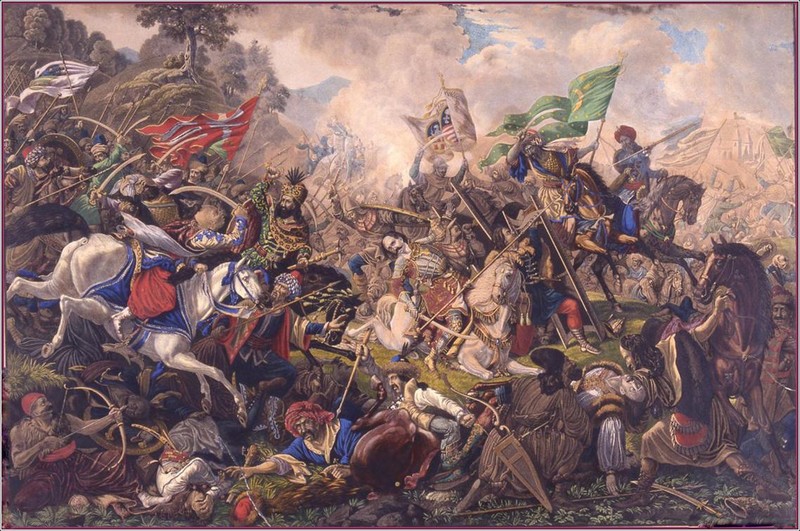
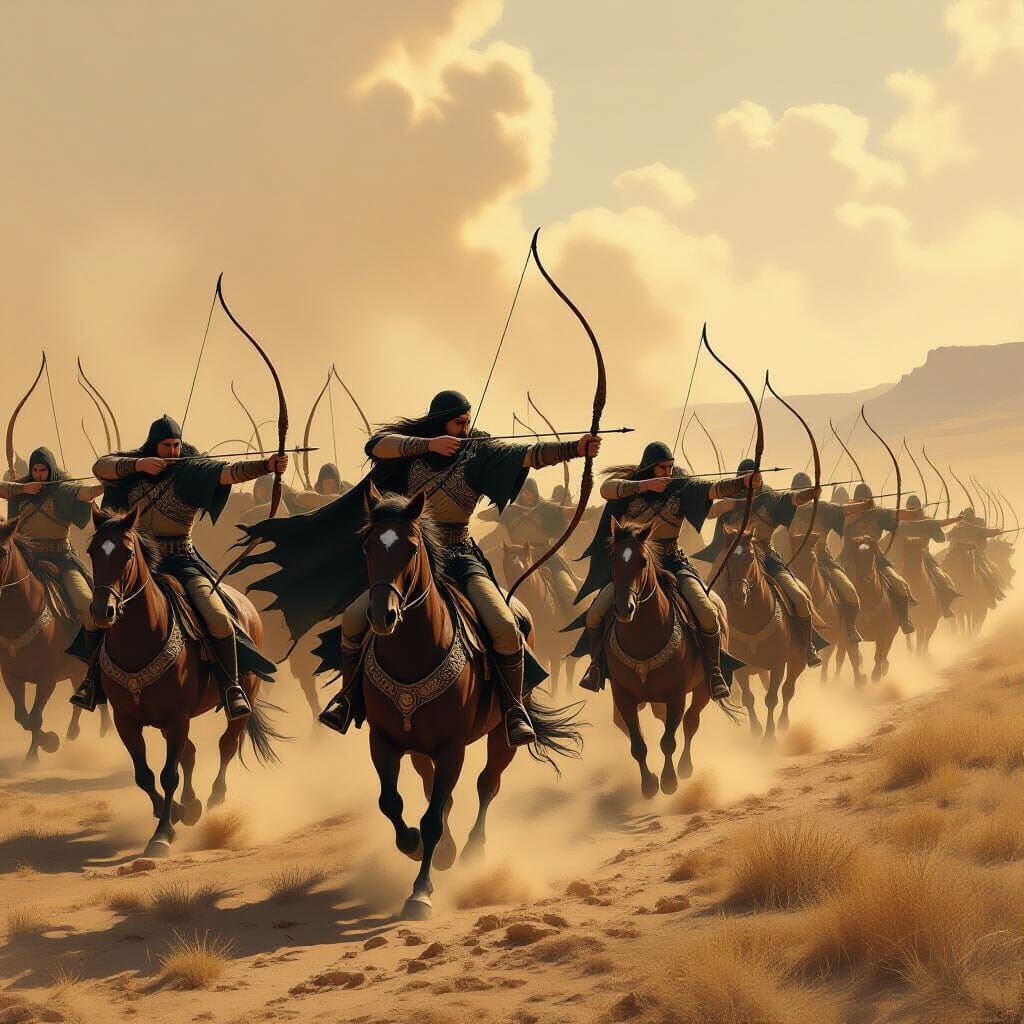
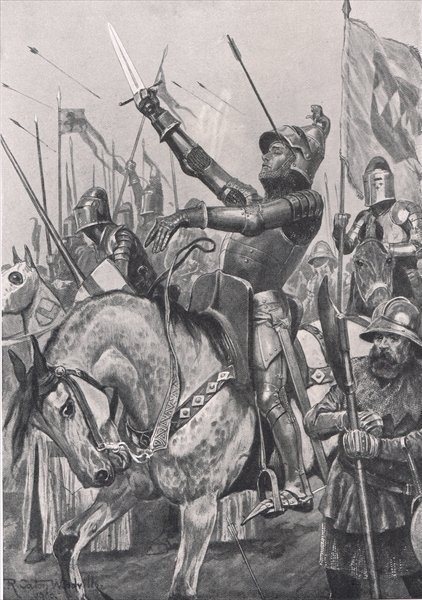
On July 21, 1403, an army under the command of Lancastrian King Henry IV and a rebel army under the command of Henry Harry Hotspur Percy of Northumberland fought the Battle of Shrewsbury. The battle put an end to challenge of Percy to King Henry IV of England and confirmed the efficiency of the longbow. It was the first time English archers had engaged against each other in combat on English territory. Part of the fighting is believed to have taken place at what is now Battlefield, Shropshire, England, three miles north of the center of Shrewsbury. Battlefield Church and Battlefield Heritage Park commemorate it today. The Percys had earlier aided Henry IV in his conflict with King Richard II of England, which came to an end when Henry IV took the throne in 1399. The Percys later backed Henry IV in Scotland during both the negotiations and the battle against the Scots, as well as in Wales during the early stages of the rebellion by Owain Glyndŵr. Many powerful landowners who had been promised land, cash, and royal favor in exchange for their unwavering loyalty had backed King Henry IV. The Percys were promised territories in and around Cumberland after the war, but a rival received them instead. The Percys rebelled because the promised money never showed up. Publicly renunciating their loyalty to King Henry IV were Henry Percy, 1st Earl of Northumberland, and Thomas Percy, 1st Earl of Worcester. They accused him of perjury because he not only claimed the throne but also his previous lands and titles, taxed the clergy without Parliament-approval despite his vow not to, killed and imprisoned King Richard II, prevented a free Parliamentary election, and refused to give Owain Glyndŵr, who was holding Edmund Mortimer, a fair ransom. In addition, the King refused to allow the Percys to set free the Scottish nobility who had been taken prisoner at Homildon Hill in exchange for a ransom. The news of the Percy forces reached King Henry IV at Burton-on-Trent on July 12, presumably as he was leading an army north to support the Percys against the Scots. He may have predicted the change of heart by the Percys, but promptly revised his preparations to face the urgent threat posed by the Percys. He turned around and led his army westward, reaching Shrewsbury before the Percys could take the town. On July 20, both armies descended upon the Shrewsbury region and positioned themselves to the north and south of the River Severn, which round the town. Hotspur first established his base at the house of William Betton, while his army was camped near the town. In order to cut off the escape route of the Percys to Chester, the forces of the King crossed the Severn the following day at Uffington, which is around one mile east of Shrewsbury. After they were defeated, the forces moved onto a field known by a number of different names, including Haytleyfield, Husefeld, Berwykfeld, and Bolefeld. The conflict started in the Harlescott manor, roughly one mile to the southwest of the current location of Battlefield Church. There was a big field of peas where the fight was fought. King Henry IV lifted his sword a couple of hours before dusk. A fierce barrage of archers struck first, killing or maiming numerous men before they could engage in hand-to-hand combat in the field. Overall, Cheshire bowmen in Percy camp turned out to be better. A sufficient army of the King were still on the field, especially on the left wing of Prince of Wales. Perhaps driven by desperation, Hotspur spearheaded an attempt to assassinate the King directly, which resulted in the destruction of the Royal Standard and the death of Sir Walter Blount, the standard bearer, at the hands of either Percy or Archibald Douglas, 4th Earl of Douglas. It is said that Hotspur was shot in the face by an arrow when he opened his visor, resulting in his death during the charge. Not long after, the fight was over. However, many are said to have been unaware of the winner. After being buried with honors at Whitchurch, Shropshire, by his maternal first cousin Thomas Nevill, 5th Baron Furnivall, there were soon whispers that Henry Percy was not dead. The King had him disinterred in retaliation. His body was quartered and shown at Chester, London, Bristol, and Newcastle upon Tyne. Later, it was set up in Shrewsbury, impaled on a spear between two millstones in the marketplace pillory, and accompanied by an armed guard. Sent to York, his head was impaled on the north gate, facing his own territory. His ashes were returned to his widow Elizabeth in November. #History

This article uses text information from the Wikipedia article -- Battle_of_Shrewsbury -- [Wikipedia-Article-Link : https://en.wikipedia.org/wiki/Battle_of_Shrewsbury ] which is released under the -- Creative Commons Attribution-ShareAlike License 4.0 -- [License-Link: https://en.wikipedia.org/wiki/Wikipedia:Text_of_the_Creative_Commons_Attribution-ShareAlike_4.0_International_License ] [List of Principal Authors (5 or less) of the Wikipedia-Article on the date of this Article being Created in this Website : - 86.31.17.165 , Oeconomos , Maury Markowitz , Cloptonson , Acne trumpet] [Use the following Authorship tool to find out the author contributions :- https://xtools.wmcloud.org/authorship ] [The Current Article on this Website has been paraphrased from the above linked corresponding Wikipedia-Article and You may redistribute this, verbatim or modified, provided that you comply with the terms of the Creative Commons Attribution-ShareAlike License 4.0] [License-Link: https://en.wikipedia.org/wiki/Wikipedia:Text_of_the_Creative_Commons_Attribution-ShareAlike_4.0_International_License ]

This article also uses an image from the Wikipedia article -- Battle_of_Shrewsbury -- [Wikipedia-Article-Link : https://en.wikipedia.org/wiki/Battle_of_Shrewsbury ] [Image : Death of Henry Harry Hotspur Percy, from a 1910 illustration by Richard Caton Woodville Jr.; Author : Richard Caton Woodville Jr. (1856–1927)] [Wikipedia-Image-Link: https://en.wikipedia.org/wiki/File:Henry_Hotspur_Percy.jpg ] [This is a faithful photographic reproduction of a two-dimensional, public domain work of art. The author died in 1927, so this work is in the public domain in its country of origin and other countries and areas where the copyright term is the life of author plus 95 years or fewer. This work is in the public domain in the United States because it was published (or registered with the U.S. Copyright Office) before January 1, 1929.]  [Please Also Relate to Original Individual Text and Image URLs for More Usage Property and Sharing, Remixing or Attributing the Contents]
[Contents on Wikipedia is covered by -- Disclaimer -- [Wikipedia-Disclaimer-Link: https://en.wikipedia.org/wiki/Wikipedia:General_disclaimer ] [Contents in this Website is also covered by Disclaimer linked at the bottom of the Page]  [This website article means no intellectual appropriation by any way and only wishes to contribute in sharing of knowledge]


  Historical Events  


Click on Images for Information



Disclaimer   Privacy Policy   Disclosure   User-Manual   Contact   About Us