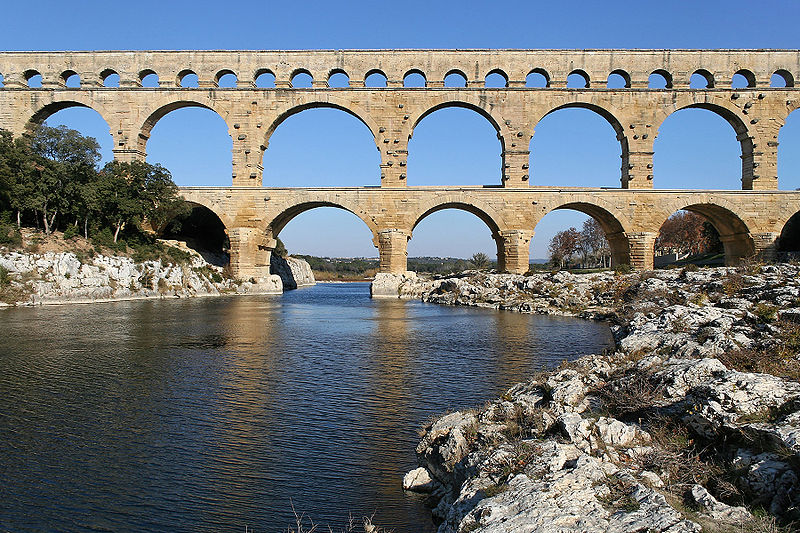
The Romans built a large number of aqueducts to transport water from far-off sources into their towns and cities, supplying fountains, public baths, latrines, and private residences. The communities were kept clean and free of effluent by removing waste water through intricate sewage systems and releasing it into adjacent bodies of water. Water for farms, gardens, milling, and mining operations was also supplied via aqueducts. Aqueducts were made of stone, brick, or concrete tubes that were buil ... (Read More)